The 15 Best Vocalists of All Time: Voice Types & Vocal Ranges

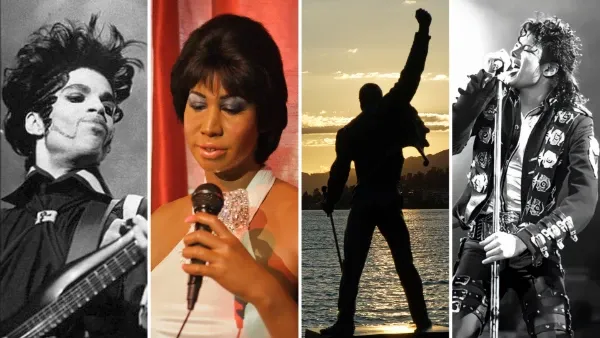
Every great person who has walked on Earth is enormous and unforgettable because of a strong reason. Either they have done something phenomenal in the field of medicine or business, in arts or in astronomy. But what if we told you that behind the greatest singers of all time is not just their music, lyrics or vocals but something more detailed, something pertaining to vocal pedagogy, the science and art of how a voice is taught?
You are about to dive deep into the jaw-dropping realities of the greatest voices, which built their homes within our hearts and souls because of their incredible vocal range, amazing voice types and mesmerizing register shifts that happen within seconds and have stunned us all to date. Their live performances are still watched and enjoyed by generations, and their recorded songs hold a strong position in our playlists. There are many, but we have chosen to discuss the top 15 for you.
They were picked for their technique, vocal range and influence. Aretha Franklin takes the top spot among the best vocalists of all time for her lasting impact on singers across generations.
1. Aretha Franklin
Voice Type: Mezzo-Soprano
Vocal Range: 3 to 4 Octaves (C3 – E6)
In 2018, the world lost Aretha Franklin, the “Queen of Soul,” but her immortal legacy never left and continues in the world of music. With her strong, deep chest voice and gospel melisma, Franklin is famous for her growls, blues inflections and powerful dynamic control. The “Natural Woman” singer always made sure the lyrics were delivered with full control of her voice. She mastered the art of bending notes expressively and inspired many with seamless transitions from speech-like phrasing to a grand climax while protecting the emotional essence of the song.
2. Freddie Mercury
Voice Type: Light Baritone
Vocal Range: 4 Octaves (F2 – F6)
You say vocal versatility, we hear Freddie Mercury, and that is not even a question. Why? Undoubtedly, Freddie knew how to reach a wide range of notes. Thanks to his baritone chest voice, subharmonic vibrations and lighter falsetto, we have some of the evergreen songs, including “Bohemian Rhapsody” and “Somebody to Love.” Mercury’s vocal stamina has been the benchmark for singers, especially in managing the dramatic changes in tone and weight of the vocals, which he mastered to perfection.
3. Whitney Houston
Voice Type: Mezzo-Soprano
Vocal Range: Just over 3 Octaves (A2 – C6)
We listen and appreciate, but what we usually miss are the details and the talent of the vocalist behind each lyric they sing. The “I Will Always Love You” singer is the undisputed queen of breath control, moving from a soft register to a full-chested high belt without any audible break. Whitney’s upper notes rarely sound disconnected, because she blended her strong chest voice smoothly into her higher range. The effortless-sounding high pitches have always been the cherry on the top of her tracks.
4. Mariah Carey
Voice Type: Lyric Coloratura Soprano
Vocal Range: 5 Octaves (F2 – G7)
Known for her whistle register and delicate breathy tones, Mariah Carey stands strong among the best vocalists of all time. The “Vision of Love” singer’s voice has given us some of the most memorable songs of our lives. With note-for-note run precision and rapid melisma, Carey has mastery across multiple vocal registers. Her effortless switching between lighter upper tones and fuller lower notes deserves to be studied. She knows how to make the whistle notes sound not forced but smooth like butter.
5. Luciano Pavarotti
Voice Type: Lyric Tenor
Vocal Range: 2.5 Octaves (C3 – F5)
Luciano Pavarotti, the Italian singer, had a strong command of the transition through the passaggio. The “Nessun dorma” singer is famous for his clear vowel placement and reliable high notes. We can’t forget to mention the bel canto technique and his high Cs, which earned him his name and fame. His live performances are among the most celebrated ever recorded. Maintaining a consistent vocal line while transitioning between head and chest voice was one of the many talents Pavarotti had.
6. Ella Fitzgerald
Voice Type: Mezzo-Soprano
Vocal Range: 3 Octaves (D♭3 – D♭6)
She painted with her voice. Honestly, that is what we felt when we listened to the songs of the legendary Ella Fitzgerald. Globally known and recognized for her scat singing and pinpoint-accurate pitch, the “How High the Moon” singer moved between registers with almost no audible breaks, even during complex jazz improvisations. This is enough to know how unbelievably talented and gifted she was. During live performances, she used to leave the audience stunned with her beautifully intimate tone. Her long-held notes were firm and her diminuendo was spectacular.
7. Michael Jackson
Voice Type: Lyric High Tenor
Vocal Range: 3.5 to 4 Octaves (F2 – E6)
You won’t be surprised to see the “King of Pop” Michael Jackson’s name here, since his falsetto flips and soft, breathy tone are among the signature features of his songs. The “Man in the Mirror” singer made his songs distinctive with his strong chest voice, vocal hiccups, cries and percussive breaths and sounds. With his unique voice, it was almost impossible to hide Jackson’s voice, even when he sang backing vocals. The biggest examples are Rockwell’s “Somebody’s Watching Me” and Stevie Wonder’s “All I Do.” Jackson’s songs are known for breathy tones and melodic lines.
8. Stevie Wonder
Voice Type: Lyric Tenor
Vocal Range: 4 Octaves (E2 – E6)
With his melismatic improvisations and bluesy pitch bends, Stevie Wonder is a legend at moving between falsetto and chest voice. The “Isn’t She Lovely” singer was such a music genius that Michael Jackson himself openly admired his work and named him as an influence. Wonder knew very well how to handle dynamic phrasing and improvisation. Many singers in history have passed away, and many are ruling the music industry right now, but Stevie knows how to control an audience during live performances.
9. Celine Dion
Voice Type: Lyric Soprano
Vocal Range: 3 to 3.5 Octaves (B2 – E6)
The “It’s All Coming Back to Me Now” singer, Celine Dion, is known for sustained belting, remarkable breath management and amazing, crisp, clear diction in multiple languages. Now that is something that separates her from the rest of the vocalists, as she is a powerhouse of talent and passion. For long durations, Dion delivers strong upper notes with ease. The climax of her songs never fails to give goosebumps to the listeners.
10. Sam Cooke
Voice Type: Tenor
Vocal Range: Just over 3 Octaves (E2 to E5 / G5)
When someone talks about the yodel-like break, it reminds us of no one other than Sam Cooke, who mastered the art of using sounds like “whoa-oh-oh” in his songs, turning them toward a light falsetto. The “A Change Is Gonna Come” singer inspired many vocalists with his silky-smooth legato and gospel-style ornaments. The seamless command he had over changes in intensity and transitions between the registers was fantastic. He made singing sound so easy and effortless, and that is what made him unique.
11. Maria Callas
Voice Type: Dramatic Coloratura Soprano
Vocal Range: 3 Octaves (F3 – E6)
If we say no one has done as much justice to soprano sfogato as Maria Callas did, that won’t be an overstatement. The control she showed over her coordinated passaggio transitions was commendable. The American-born Greek soprano’s expressive phrasing and dramatic storytelling on stage used to leave the audience in awe. Coloratura runs are among the most prominent of her key vocal features. She maintained rich, dark tonal colors in her vocals, and her facial expressions were just as irresistible.
12. Prince
Voice Type: Lyric Tenor
Vocal Range: 4 to 5 Octaves (E2 – B6)
The piercing, agile falsetto of Prince has often been the highlight of his songs, but what we may not have talked about enough is his controlled throat screams and expressive vocal distortion. The singer of “The Beautiful Ones” used to create sharp contrasts when he switched from soft, low tones to high-pitched tones with strong breath management and without forcing the transition. The magic he created on stage was witnessed by fans and gave them an unforgettable experience for a lifetime.
13. Lata Mangeshkar
Voice Type: Soprano
Vocal Range: 3 to 4 Octaves (E3 – F6)
“The Nightingale of India” Lata Mangeshkar, who reportedly sang for more than 1,000 Hindi films, had an expressive, melodic voice that continues to inspire the singers of Hindi cinema. With flawless pitch accuracy, Mangeshkar was gifted with tonal purity and had the passion to bring songs to the level of perfection with sustained vowels and controlled vibrato. Her undisputed command of ornaments like meend and gamak, and her tonal consistency, were no less than a wonder.
14. Nusrat Fateh Ali Khan
Voice Type: Tenor
Vocal Range: 3 to 3.5 Octaves (F2 / G2 – F5 / G5 and above)
Nusrat Fateh Ali Khan is referred to as “Shahenshah-e-Qawwali” (King of Kings of Qawwali), and if you have any doubts, the first few minutes of any of his qawwalis will clear them all. With his powerful chest voice and strong vocal stamina, Khan Sahab had an unmatchable stage presence. To date, his qawwalis are listened to by new generations. His rapid sargam improvisations and expressive shifts in vocal intensity gave us some of the legendary tracks, including “Allah Hoo” and “Tumhe Dillagi.”
15. Axl Rose
Voice Type: High Tenor
Vocal Range: ~5.5 Octaves (F1 – B♭6)
Managing vocal distortion has been a highlight of Axl Rose’s musical career. The American singer is famous for his rasp-heavy rock vocals, chest voice and sharp contrasts between low tones and extreme high notes. The aggressive phrasing he executes in his songs is just phenomenal. The “Welcome to the Jungle” singer has been praised for his wide octave jumps and piercing high screams. One can easily identify his unique voice, as he knew his strengths and talents very well.